Wedding Ring Shopping 101: What To Look For In A Moissanite Ring
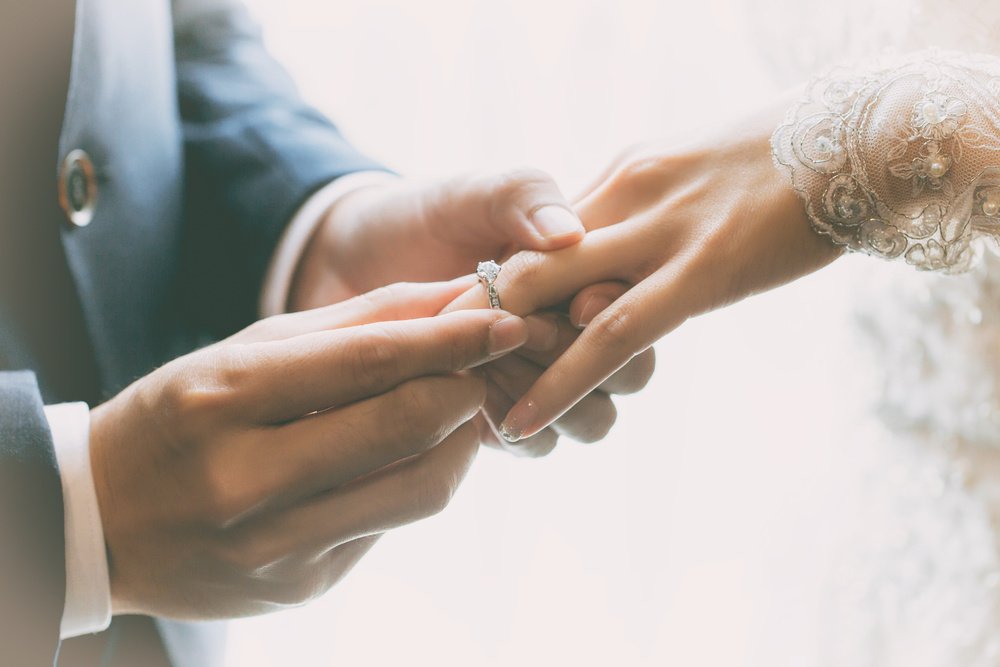
Moissanite is one of the most brilliant stones and is very close to diamonds. It got its name from Henri Moissan, a French scientist, who first identified this mineral form of silicon carbide correctly. Often mistaken for diamond, moissanite can shine brighter than the former, giving it a higher superiority level than all other types of gemstones.
Moissanite crystals are very rare, given their unparalleled brilliance among manufactured jewels. Many brides opt for moissanite for wedding rings, given that it’s often cheaper than diamonds but not inferior in terms of brilliance.
That said, you can’t enjoy the distinct glory of moissanite if you cannot choose the best. It would help if you considered certain factors when saying ‘I Do’ to a moissanite wedding ring, among all other facets of completing the wedding of your dreams. Fortunately, this article provides five factors. Read on.
The Cost
If you’re a couple on a budget, you’ll be glad to know that moissanite wedding rings are more budget-friendly than diamond rings. When shopping, you may have more leeway to choose the ring you want without necessarily going over the budget.
Like shopping for any other jewelry, the cost is always one of the most significant factors that should shape your decision. You can simplify the wedding ring shopping process by immediately narrowing it down based on budget. Yes, your dream 3 carat moissanite ring can still be within reach with the right price and supplier.
The Moissanite Grade
Moissanite is a gem of its own, one that’s lab-grown. Like diamonds, however, it’s also classified according to various grading systems. Generally, there are three: classic moissanite, colorless, and near-colorless moissanite.
The distinction between the three are as follows:
Classic moissanite is one with a yellowish-green stone. These were the first types of moissanite when technology wasn’t as advanced as it is now.
Colorless moissanite resembles an E-color diamond, (which has the second-whitest color on the standard grading scale and will appear bright white without a hint of color)
Near-colorless moissanite looks more like the H-color diamond, which is in the top half of the near-colorless range.
Each of those grading moissanite grading systems comes with its pros and cons. Ultimately, the choice boils down to the bride’s preference. It’s best to discuss your wish with your moissanite wedding ring supplier so they can present you with options across each grading type.
The Cut
You’ll have to be very cautious about this third point. The definition of ‘cut’ for diamonds and moissanite is different. The former is used in terms of scale, while the latter is graded on the clarity scale. Hence, the ‘cut’ shouldn’t be your sole deciding factor.
Ask about this when you’re choosing from among various moissanite wedding rings. A good supplier should be patient enough to explain all the differences to you so you can iron out all those gray areas you're thinking of.

The Quality
Moissanite is one of the most durable stones on earth. It boasts a 9.25 rating on the Mohs Scale of Hardness. Diamond, of course, reigns supreme at 10. But, with a difference only of 0.75, that’s not too bad, given the wider difference in price.
Moissanite is also harder than sapphire and ruby. One of the advantages of using this type of gemstone for your wedding ring is it can survive daily wear and tear, as it doesn’t scratch or wear off easily.
Along that line, it’s a must to check that the moissanite wedding you’re buying indeed lives up to that expectation of quality. Otherwise, you’re only shortlisting yourself off its quality. Be skeptical about suppliers who aren’t transparent about that, as you could be ripping yourself off the moissanite wedding ring you deserve.
The Distinct Characteristics And Brilliance
This following insight may be obvious, but it’s still worth emphasizing. Don't be one of those wedding ring shoppers who insist on having a moissanite ring that’s exactly like a diamond. Those two are very distinct, though they may look similar. So, make life simple on your part by understanding, before you even shop, that moissanite is not diamond, and it’ll never be.
There are many distinctions between both, such as:
Moissanite has a more colored sparkle than diamond;
Moissanite repels oil and dirt better than diamond;
Moissanite has a fire-like sparkle, evident when you move the ring around;
Moissanite stones have more flexibility, especially for customizing, as they’re lab-made, compared to natural diamonds.
Knowing those distinctions can help you better understand how moissanite and diamonds are very different from each other. That way, when you shop, you can focus more on what moissanite rings have rather than what they don’t have, so you’ll never pressure yourself into comparing them with diamonds.
Conclusion
Diamonds may be a girl’s best friend, but so can moissanite rings. With many brides being more conscious about their decisions, the demand for moissanite rings may have risen in recent years. There’s no sacrificing the shine and quality with moissanite rings, as you may have to with a diamond’s budget-breaking price tag. There are loads to get by, but you can’t go wrong with a well-known and good moissanite ring supplier. This is your wedding ring, after all. Like your marriage, it should be one meant to last a lifetime.
MORE GREAT WEDDING PLANNING TIPS!












Wedding Suppliers We Think You’ll Love!
Wedding Fayres We Think You’ll Love!